
Remarkable Steps Forward in Ship Breaking - Lessons Learnt from Bangladesh
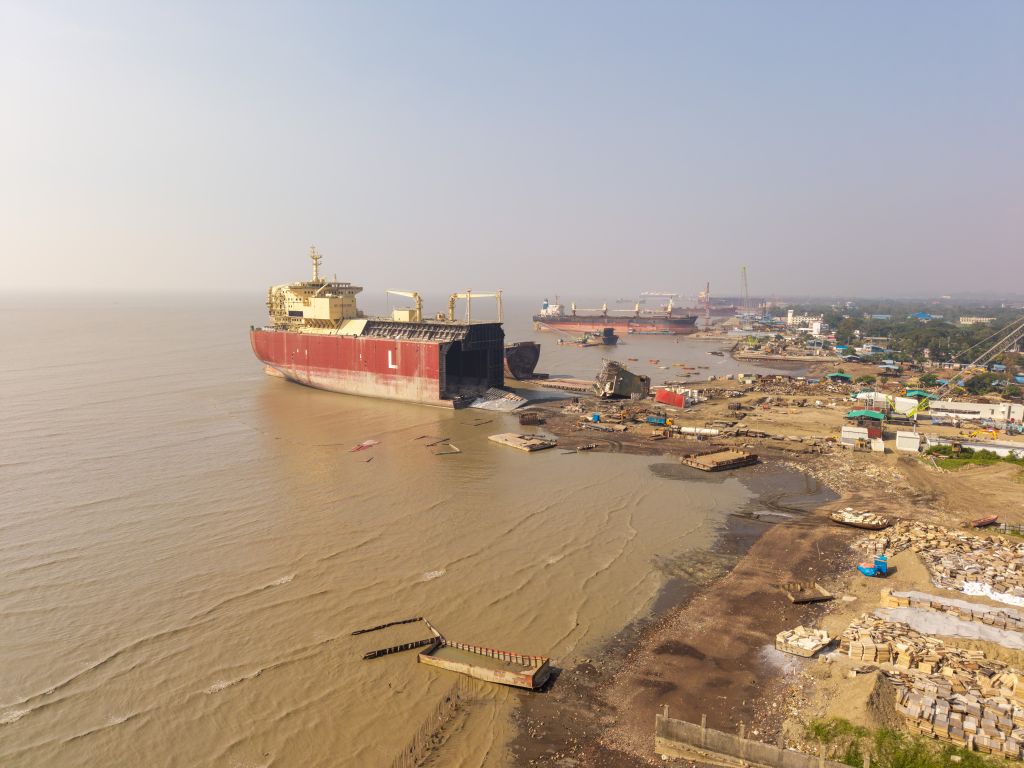
I travelled to Bangladesh, one of the world’s leading countries in ship breaking, to see what happens when ships reach the end of their lives – and what ship builders and designers can learn from it. I witnessed a surprising transformation, which many didn’t believe was possible.
A ship is like a small floating city, built from a massive number of components, products and materials. It’s essential to understand the end-of-life of the ship to be able to consider the whole life cycle of a ship during the design and building phase. To make parts circular, they should stay in use as long as possible — ideally reused and remanufactured before it ever needs recycling. Decisions made during the design and building phases influence how repairable and recyclable these parts will be.
The longer we can keep components and materials in circulation, the higher their value remains.
From Ship Breaking to Ship Recycling
Cruise ships are especially complex systems with a huge number of different parts, long life cycles and several docking periods during their use. Major refitting and refurbishing happen approximately twice in every five years, and in Europe, those are mainly carried out in Spain.
Often the materials are not broken, but simply outdated – for example, restaurants or cabins will be modernized to look attractive to customers. Refitting may also follow such a tight schedule that there is little time to assess whether materials or components could remain in use longer or be partly repaired.
Decisions about whether to repair or demolish a ship are made by shipowners, and in some cases, vessels are sent for demolition earlier than expected. This may happen for several reasons, such as accidents, the shipowner’s bankruptcy, or repair costs becoming too high. As a result, even though the average lifespan of a ship is around 30 years, some vessels may end up in a shipbreaking yard before reaching the end of their operational life. When the decision is made for breaking the ship, most of them ends up to the largest ship-breaking countries: India, Bangladesh, Pakistan, Turkey and China. (Kuusinen, 2021; Solakivi, T., Kiiski, T., Kuusinen, T. & Ojala, L., 2021).
The Hong Kong Convention
The decision to demolish a vessel is influenced by several factors, with the vessel’s age being the primary consideration. Other key drivers include the enforcement of increasingly stringent regulations and legislative requirements, such as ballast water management compliance, CCAI-related operational concerns, scrubber installation requirements, and the transition toward dual-fuel technologies, among others. In addition, the sale process itself is affected by multiple regulatory constraints, including EU ship recycling legislation, which limits the destinations and recycling methods available for EU-flagged vessels, further shaping market options and decision-making.
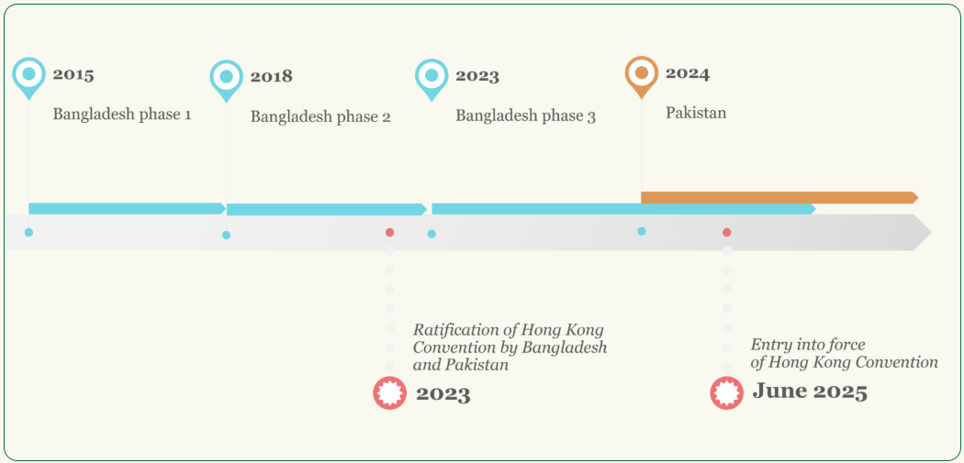
The Hong Kong Convention (HKC) is one of the international agreements guiding the industry. Although it took around 16 years from its adoption in 2009 to finally enter into force in 2025, it has now been ratified and is officially in force. The Convention mainly sets requirements for safe and environmentally sound ship recycling, including the use of an Inventory of Hazardous Materials (IHM), certification and inspection of ships, and authorization and regulation of recycling facilities. At the moment, 24 countries have ratified the HKC. (IMO1 & IMO2)
A responsible shipowner should do business directly with the recycling yard — visit them, audit them, and ensure safe and environmentally sound operations. This way, more of the money flows directly to the yards, helping them invest in modernization, worker safety, and better environmental performance. Furthermore, continued efforts should be made to encourage additional states to ratify the HKC, thereby expanding its global application and strengthening the principle of uniform implementation. (The Convention applies to ships entitled to fly the flag of a State Party and to ship recycling facilities operating under the jurisdiction of a State Party. States that have ratified the Convention are referred to as Parties, while those that have not are non-Party States.)
At the same time, shipowners, cash buyers, and other stakeholders should be encouraged to avoid reflagging vessels to non-Party States immediately prior to recycling and, where practicable, to maintain or transfer vessels under the flag of a State Party throughout the recycling process. Greater transparency in ownership, consistent certification practices, and broader participation in the Convention would significantly strengthen regulatory oversight, improve compliance, and promote a more effective and harmonized global ship recycling regime.
Bangladesh – A Transformation in Progress
I visited Bangladesh in November 2025, just a few months after HKC was taken in action 26th of June. My expectations were very different from what I found on site. Based on articles and reports I had read beforehand; I was prepared to see unsafe and polluting conditions. But what I witnessed was a surprising transformation, which I learn many didn’t believe was possible.
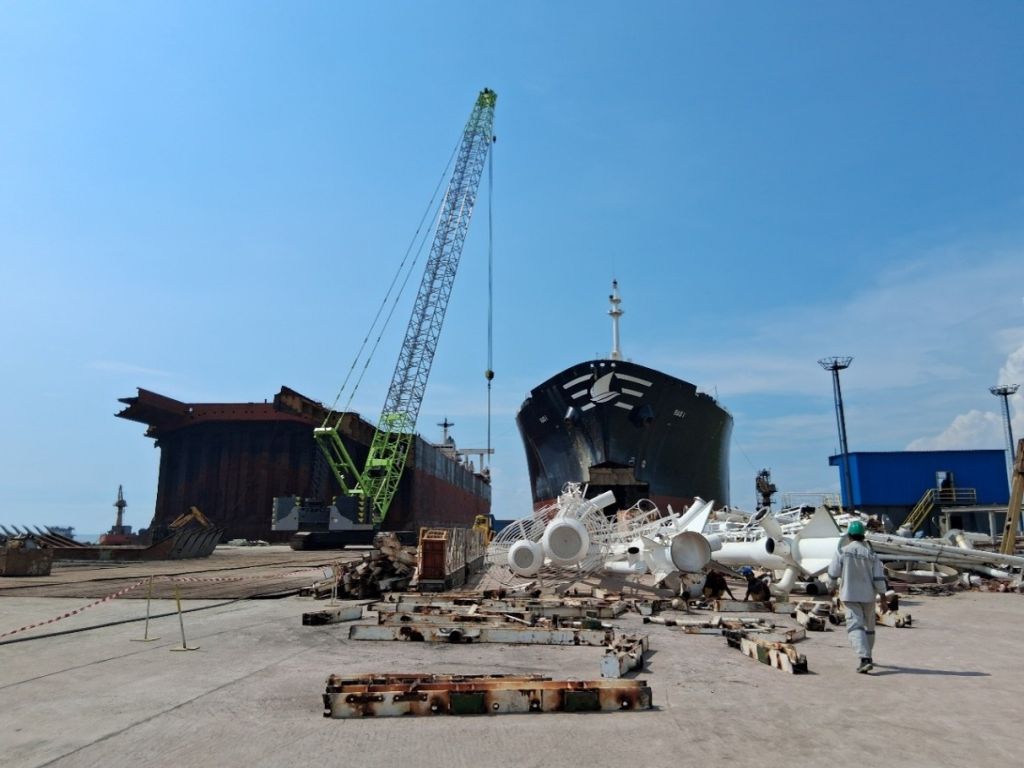
There are 108 registered shipbreaking yards under the Association in Bangladesh, and so far 23 of them are HKC-compliant, branding themselves as ship recycling yards. I visited four of these yards — and the change they have made in ten years is remarkable.
The transition has been gradual and has involved many stakeholders: government and ministries, international organizations and other countries, customers and the industry itself. The Ministry of Industries has established the Bangladesh Ship Recycling Board and the Government of Norway has played a key role by funding the transformation through the Sensrec project with IMO. (Sensrec 1) https://sensrec.imo.org/bangladesh-ship-recycling/
I interviewed yard owners, COOs, financial managers, naval architects, and health & safety managers. When I asked what has driven the change, the answers were consistent: international legislation, customer demands for compliance, and growing interest in “green steel.” Education and training have also been key. The older generation started the shift; the younger generation is now taking it further — caring more about workers and the environment.
Still, challenges remain. Accidents happen, and environmental protection could be stronger. One major issue is the lack of long-term data. Data collection, accident analysis, and risk management are relatively new practices. Much information is not yet recorded, and none of it is digitalized — also essential documentation might be missing when a ship is arriving to demolition. A big threshold is downstream waste management. Bangladesh does not have a central treatment facility for hazardous materials. However, at present, all compliant facilities use individual waste disposal solutions for specific hazardous waste, which are expensive.
Designing for Circularity
Many of the discussions I had in Bangladesh focused on steel — the most valuable part of a ship. Big part of Bangladesh’s national steel demand is covered by ship recycling. Yards sell steel parts and plates themselves, often cutting them to size by request for inland shipbuilding or construction. Every piece is dismantled as undamaged as possible to get a better price. Design for easy dismantling — for example, replacing some welded parts with bolted ones, or designing safe ways to empty gas pipelines — we could make the entire process safer, faster, and more circular – create value and business opportunities.
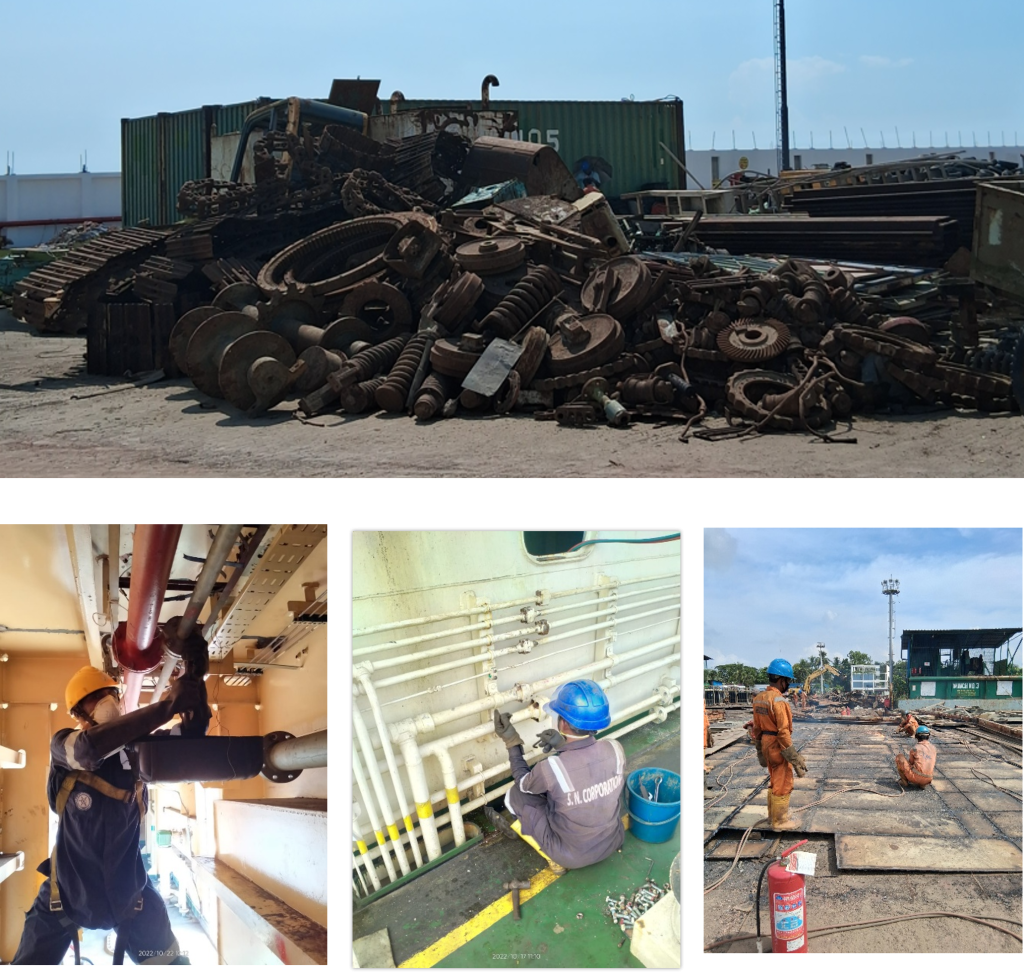
Other materials, like interior outfitting, are not seen valuable. They are seen as part of the cleaning process that must be completed before the yard receives permission to start cutting.
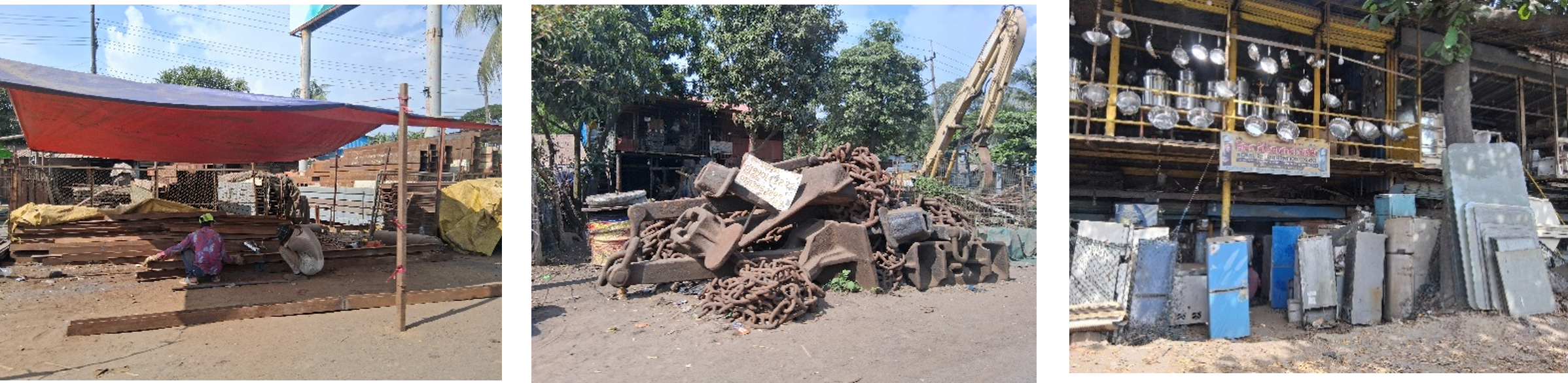
What I learned is that interior items are sold in large categories. For example, if a buyer wants furniture or electronics, they often need to take everything from a ship or on one deck — without the chance to select or test items individually. Sometimes buyers can briefly inspect the ship before making an offer, but in other cases the yard estimates the total volume and sells them by weight. As a result, unwanted and broken items may end up in illegal landfills or be burned on the streets.
Under the Hong Kong Convention, ships must have on board an Inventory of Hazardous Materials (IHM), which must be prepared and verified in line with IMO guidelines, and updated to indicate the location of hazardous materials. However, a lack of accurate information still causes accidents, and older ships are not required to carry such an inventory. This also creates a need for shipyards to identify all hazardous materials, as they must be properly reported and managed at the facility.
This means there’s no detailed inventory of what goes on to the market and the big picture about volumes and values are missing. Sales are measured in tons, not pieces, making it hard to develop downstream markets or track materials. The interviewed persons told me that some products are sold locally — the Chittagong area, where I visited, has a vast secondhand market stretching for kilometers — while others, such as non-ferrous metals, are exported to regional recycling hubs like Dubai and Singapore.
If better documentation about the interior outfitting could be ensured and the information would travel with the ship’s long way the whole life cycle, the components and material would be easier to create value and be recycled. If the design would allow easier and faster dismantle without breaking them, it would create business opportunities during the refitting and maybe it would be forth to develop the downstream market at the end of the life phase.
My biggest takeaway is hope
During the two weeks in the shipyards of Bangladesh, I learned an incredible amount. The biggest takeaway is hope. If the 23 facilities in such a massive, dirty, and dangerous industry can transform this much in a relatively short period of time, the sustainable transition is possible.
This experience strengthened my belief that responsibility must be shared across the entire value chain — from shipowners, builders, and operators to breakers, recyclers, governments, academia and education. Every decision should consider the full life cycle, and all actors in a value chain must carry their share of the risks, costs, and responsibilities.
Because if we now leave the Bangladeshi shipyards to survive on their own — after they have made major investments, trained workers, and improved safety — then the just transition is not happening. The ocean is global. Ships move people and goods across the world — so our responsibility for the sustainability of this industry must be global too.
Author: Sini Ilmonen
Circular Business Models Research Group
References:
International Maritime Organization. About SENSREC. https://sensrec.imo.org/about/
International Maritime Organization. Bangladesh ship recycling (SENSREC). https://sensrec.imo.org/bangladesh-ship-recycling/
International Maritime Organization. Hong Kong International Convention for the Safe and Environmentally Sound Recycling of Ships. https://www.basel.int/Portals/4/Basel%20Convention/docs/ships/HongKongConvention.pdf
International Maritime Organization. Recycling of ships and the Hong Kong Convention. https://www.imo.org/en/mediacentre/hottopics/pages/recycling-of-ships-and-hong-kong-convention.aspx
Rahman, Mohammad Mahbubur. (2025). Personal interview.
Solakivi, T., Kiiski, T., Kuusinen, T., & Ojala, L. (2021). The European ship recycling regulation and its market implications: Ship-recycling capacity and market potential. Journal of Cleaner Production, 294, 126235. https://doi.org/10.1016/j.jclepro.2021.126235