
The Future of the Oceans and the Maritime Sector – Shipbuilding in the Sustainability Transition
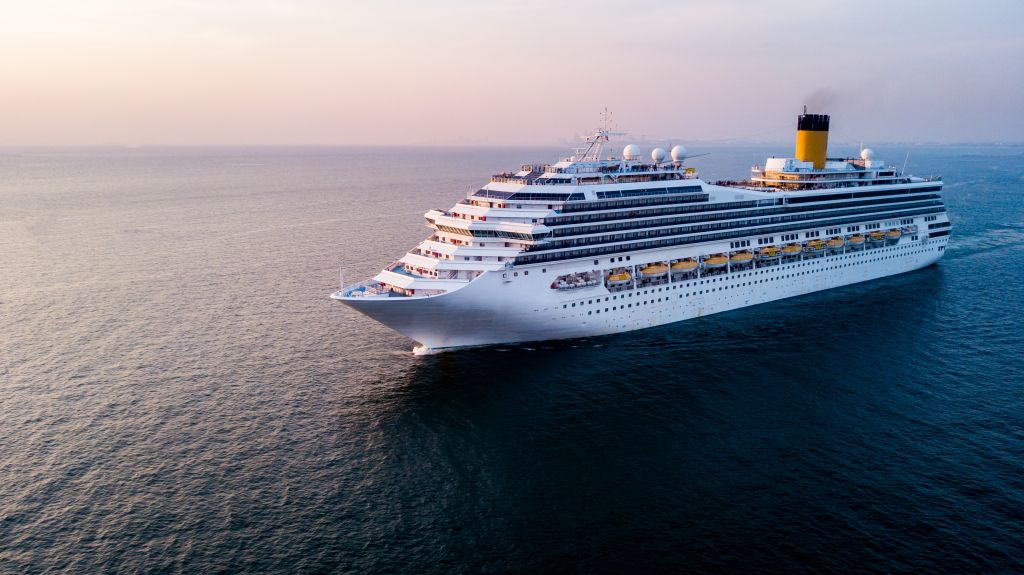
A seagull cries over the sea sparkling in the sunlight. The sky is bright blue, with only a few clouds lazily drifting here and there. A passenger ship glides smoothly into the harbor, and sailboats can be seen on the horizon. This is what a summer day at sea looks like – but what kind of future awaits our seas and the shipping industry?
World Oceans Day* is celebrated each year in early June. It is an important occasion that reminds us of the vital role oceans play in sustaining the well-being of our planet. Covering about 70% of the Earth’s surface, the oceans are a fundamental part of the global ecosystem. They produce more than half of the oxygen we breathe, largely thanks to microscopic phytoplankton (NASA, NOAA). The oceans also absorb carbon dioxide and heat, helping to regulate the climate. In addition, they provide a rich and diverse habitat for thousands of species.
Although the oceans cover most of our planet, we know surprisingly little about them. It is estimated that more than 80% of ocean areas remain unmapped or poorly unknown. Especially, deep-sea regions are known only to a very limited extent. Much of the oceans and marine environments — including many still unidentified species, ecosystems, and geological formations — therefore represent one of the last great unexplored areas on Earth.
Oceans are closely connected to human activity. They not only act as the planet’s “lungs” and play an important role in the well-being of both the Earth and humanity but also have historically been key transport routes. Nowadays, around 80–90% of the world’s trade is carried by sea (UNCTAD, 2024). In Finland, shipping—including shipbuilding—is an important export industry, with a turnover of about 12 billion euros, over 90% of which comes from exports (Technology Industries, 2025).
The shipbuilding industry has played a central role in Finland’s economy and industrial development throughout its history. This sector has provided employment for thousands of professionals over time. Its overall impact is even greater, as it also sustains an extensive subcontracting network. Since maritime routes have always been a lifeline and a gateway to the world for Finland, a broad base of expertise and knowhow have been developed through this history.
At present, the shipbuilding order book looks strong. Contracts have been signed for both cruise ships and icebreakers. In maritime industry events, discussions are already focusing on the availability of skilled labor. Developing skills and training new experts — both now and in the future — have recently become key topics of discussion.
Finland’s strength in global competition lies in technologically demanding vessels. The country is particularly known for designing and building complex special-purpose ships, such as cruise liners and icebreakers. Finland has long-standing expertise and a strong market position in this field (Business Finland, n.d.; Business Finland, 2024). In the future, the greatest threats are related to competitor countries catching up with this technological lead (Ministry of Economic Affairs and Employment, 2021). To remain competitive, it is crucial for Finland to maintain and further develop its high level of expertise. In addition to advancing education, research, development, and innovation also play a key role in sustaining competitiveness.
However, like other sectors of society, the maritime industry is facing big changes in the future. The sustainability crisis and its many dimensions — climate change, biodiversity loss, overconsumption, waste, and pollution — are already affecting the world, and responding to this crisis requires rapid actions and changes across industries and global value chains.
In the maritime sector and shipbuilding, the sustainability transition involves developing sustainable, circular economy–based solutions and operating models, adopting new business models, and integrating these solutions into every phase of a ship’s lifecycle. This work has also been carried out as part of the S4M project.
Finland has strong expertise both in ship design and construction and in advancing the industrial sustainability transition. This expertise must be maintained and further developed in shipbuilding as well as in its subcontracting and partner networks. Global demand for sustainable industrial solutions is growing. Therefore, advancing the sustainability transition in shipbuilding is not only an environmental action but can also play a key role in creating sustainable economic growth for Finland. The well-being of the oceans and the maritime industry are thus closely interconnected.
*https://worldoceanday.org/
Author: DSc (Tech) Nani Pajunen
Circular Business Models Research Group
Sources:
Business Finland. (n.d.). Maritime industry. https://www.businessfinland.com/explore-business-opportunities/maritime-industry/
Business Finland. (2024). Finnish solutions for the entire icebreaking value chain. https://www.businessfinland.fi/en/whats-new/news/2024/new-publication-presenting-the-finnish-solutions-for-the-entire-icebreaking-value-chain
NASA. (2025). The global ocean. https://science.nasa.gov/earth/explore/the-global-ocean/
NOAA. (n.d.). Ocean facts. https://oceanservice.noaa.gov/facts/
Teknologiateollisuus ry. (2025). Suomen meriteollisuus – toimiala. https://teknologiateollisuus.fi/meriteollisuus/meriteollisuus-uusi
UNCTAD. (2024). Review of Maritime Transport 2024: Navigating maritime chokepoints. United Nations. https://unctad.org/system/files/official-document/rmt2024_en.pdf