
Logistics operators are building low‑carbon, digital and resilient supply chains
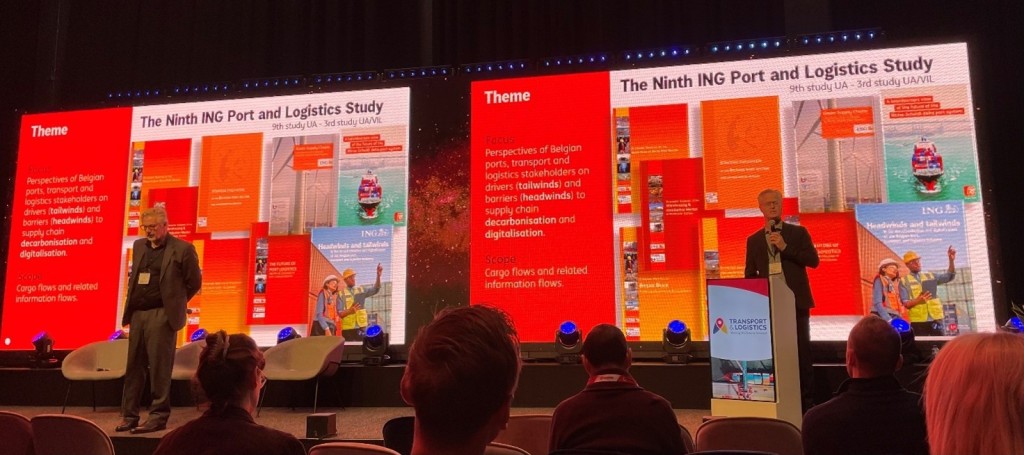
Transport & Logistics 2025 in Antwerp offered a clear view of the key transformation trends in the logistics sector. Across the exhibitions and seminars, three themes kept repeating: low‑carbon operations, digitalization and resilience. Companies can set strategies, but it is transport companies, terminals and port operators who ultimately determine how these goals are put into practice.
Low‑carbon development is progressing, but practical challenges slow it down
New studies show that logistics companies have already adopted extensive digitalization and low‑carbon programs. Artificial intelligence, automation, digital twins and IoT are now visible as concrete investments and contractual practices. Customer expectations and ESG requirements also guide emission reductions: choices related to transport modes and ports are directly linked to a company’s carbon footprint.
Emission reductions rely on familiar methods such as electrification, biofuels, route optimization, combining transport modes and improving packaging and load efficiency. However, progress is slowed by uncertainty in political steering, the financial risks of green investments and the difficulty of measuring emissions in complex global supply chains.
Digitalization as logistics’ new foundation
Many companies currently consider digitalization a safer investment than green technologies. It strengthens competitiveness, eases labor shortages through automation and makes the industry more attractive to young professionals. A company’s reputation as a digital frontrunner has become a significant recruitment advantage, almost as important as efficiency and cost levels.
Resilience as part of competitiveness
Supply chain disruptions have elevated resilience to the third key pillar. DSV highlighted several approaches: diversification such as “China+1” strategies, increasing multimodality to secure flexibility and improving forecasting capabilities with a shift toward a “just‑in‑case” mindset. Real‑time visibility, scenario planning and predefined response models have become critical capabilities.
Logistics collaboration defines the level of the entire supply chain
When logistics digitalizes, the whole chain digitalizes. When logistics becomes low‑carbon, emissions decrease across the chain. And when logistics becomes resilient, delivery reliability improves. This is why the maturity of logistics partners is one of the strategic cornerstones of a company’s competitiveness.
In summary: the more advanced the logistics network, the stronger the entire supply chain — and the better companies perform in a changing world.
Author: Sakari Kajander, Senior Advisor, Turku University of Applied Sciences.
Microsoft Copilot AI tool was used for text refinement. More on the topic in Finnish from the Logistiikka Magazine

The author is part of the Resilient Logistics, Services and Supply Chain Management Research Group at Turku University of Applied Sciences. Also participating in the Transport and Logistics 2025 event were
Jari Hietaranta
Anna Heikkilä
Noora Manninen
Nelli Puhakka
Pirjoriitta Peltola
Sources:
Seminar presentations at the Antwerp Transport and Logistics 2025 event, 14–16 October 2025.
Theo Notteboom, University of Antwerp ja Kris Neyens, VIL. The ninth ING port and logistics study: Headwinds and tailwinds in the decarbonization and digitalization of the Belgian port, transport and logistics industry. https://newsroom.ing.be/ing-port-study-2025-the-belgian-logistics-industrys-dual-struggle
Christa Sys, University of Antwerp. Expected consequences & uncertainty from tariff policies in the US.
Patrick Hore, Maersk. How has uncertainty reshaped the container shipping industry?
Natalie Segers, DSV. What can freight forwarders do for their customers to navigate the current chaos?
Frederick Dobbelaere, Deloitte. Sustainable logistics.